
French Roulette Online Casinos in the UK: Zero Rule
 Available in GB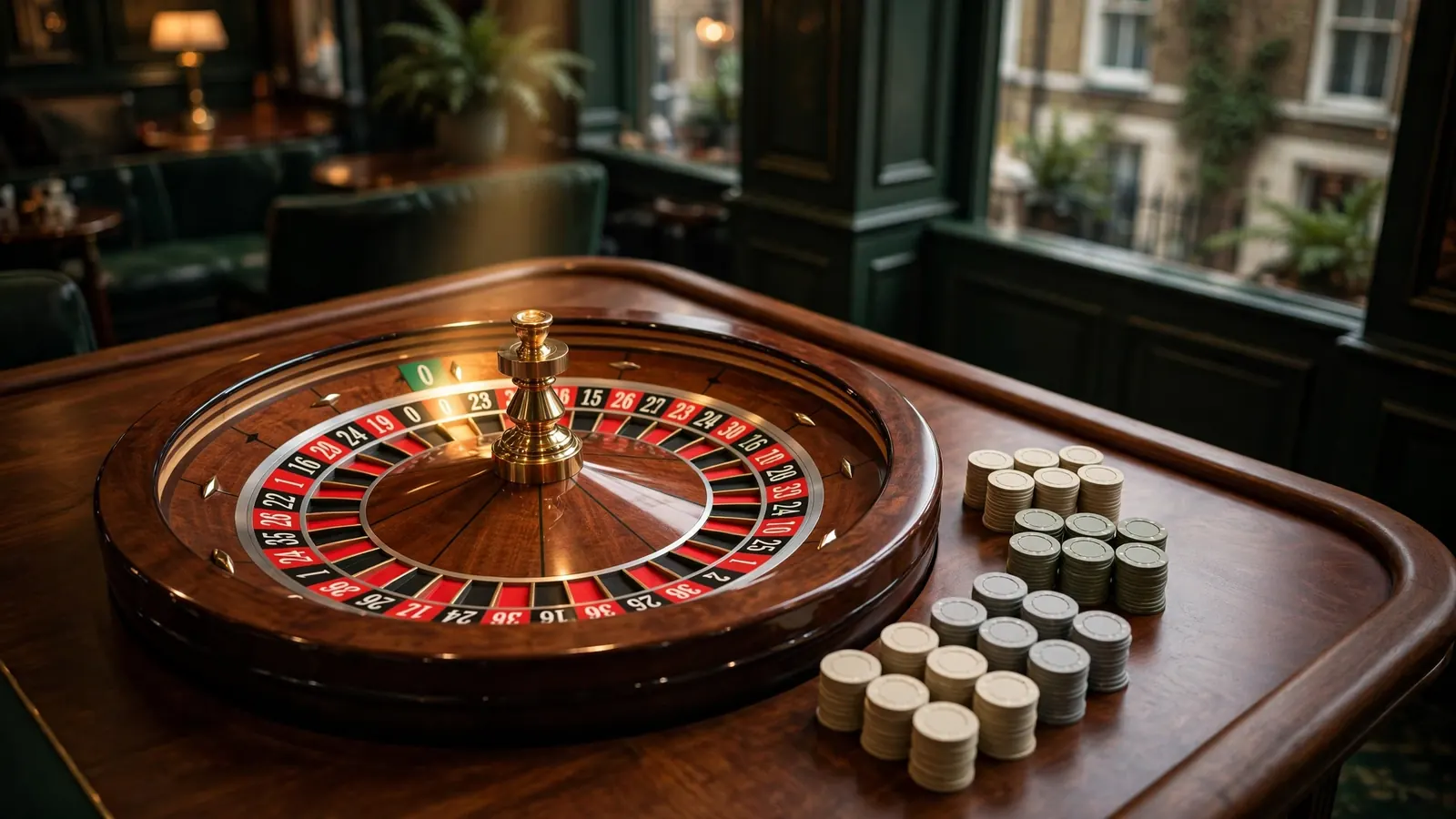
Table of Contents
La Partage returns half the stake on zero for even-money bets, while game formats, limits and bonus terms shape the wider experience.
French Roulette’s Zero Rule—and Why It Changes the Odds
The key difference in French roulette is not a special way of placing a bet. It is what happens when the ball lands on zero. On a European-style single-zero wheel, the pockets run from 1 to 36 alongside one green zero, making 37 pockets in all. That extra outcome matters because it can defeat bets that cover half the numbered results, such as red or black, even or odd, and high or low.
On a standard European roulette game, those even-money bets have a house edge of 2.70%. The payout looks balanced when a selection wins, but the zero is outside both sides of the bet. It creates the small, persistent disadvantage built into the game. That is the baseline against which French roulette’s zero rule should be understood.
La Partage changes the settlement of an even-money bet when the ball lands on zero. Instead of losing the whole stake, the player gets half of it back. The other half is lost. Because the zero now costs less on these bets, the house edge falls to 1.35%.
That reduction applies specifically to even-money bets. It should not be read as a blanket change to every wager on the layout, nor as a promise that a particular session will go better. A roulette result remains random; the rule changes the long-run mathematical disadvantage on the eligible bets, not the outcome of an individual spin.
This distinction is easy to miss in an online casino listing. “French roulette” may appear as a game title, while the detail that affects the calculation is in the rules panel or table information: whether La Partage applies, and which bets qualify. From the operational side, the title gets attention; the settlement text determines the actual rule. Small print, large consequence.
Fruit Machine Slots in the UK: How Online Reels Work
En Prison is another rule associated with French roulette and is part of the reason the format has the lowest house edge among standard roulette variants. Its treatment of a qualifying even-money bet when zero appears is not identical to La Partage: rather than returning half immediately, it can leave the bet in play for the next spin. The practical result depends on the table’s stated rules, so the two names should not be treated as interchangeable. The essential point is that French roulette modifies the impact of zero on eligible even-money wagers.
For a player comparing versions, the important question is not simply whether the interface shows a single-zero wheel. A single zero establishes the wheel’s structure, but it does not by itself confirm that La Partage or En Prison is active. The rules attached to the specific game matter. A French-labelled table without the expected zero treatment should not automatically be assumed to have the reduced even-money edge.
The difference is mathematical rather than cosmetic. Under the standard European calculation, zero makes even-money bets lose more often than they win, producing the 2.70% edge. With La Partage, a zero is no longer a full loss on those bets, bringing the edge down to 1.35%. The player still faces an advantage for the house, but a smaller one on the relevant selections. That is why French roulette is often discussed as the more favourable standard format, while the exact advantage depends on the rule in use.
This does not mean every bet in French roulette carries the same lower edge. The reduction described by La Partage concerns even-money wagers; other bet types have different coverage and settlement. Nor does the rule increase the chance that red, black, odd, even, high or low will appear on the next spin. It changes the cost of one particular result when that result is zero.
When I have reviewed roulette rules, the most useful habit has been to separate the wheel from the settlement. The wheel tells how many pockets exist and which outcomes are possible. The settlement tells what happens to a bet when one of those outcomes appears. French roulette’s reputation rests on both the single-zero structure and its zero rules, not on a different source of randomness.
Zero Rules
La Partage returns half the stake on even-money bets when zero lands, while En Prison may leave the bet in play for the next spin.
That is the point to carry into any later comparison of online French roulette games: identify the rule before relying on the label. La Partage gives eligible even-money bets a defined refund when zero lands, while En Prison may keep a qualifying bet unresolved for another spin. Together, these rules explain why French roulette has the lowest house edge among standard variants. The advantage is real, but it is specific.
What a UK Casino’s French Roulette Offer Actually Tells You
A French flag on a roulette tile is not enough to establish what the table offers. The useful details sit behind the lobby label: the game’s rules, its payout information and whether the table is live or generated by software. I have seen game names do a lot of promotional work while leaving the actual conditions several clicks away.
For French roulette casinos, the first check is whether the game information identifies the French rules rather than merely using “French” as a title. Look for a rules screen that describes the wheel and the treatment of a zero on eligible bets. La Partage and En Prison are terms that should be explained there if they apply. If the rules are unclear, the name alone does not settle the point. A casino may offer several roulette games with similar artwork and different rules.
The distinction matters when comparing online casinos with French roulette. A live table and an RNG game can both carry a French roulette label, but they are different products: one uses a physical wheel streamed from a studio, while the other simulates spins. The lobby tile may not show enough to tell which one is open. The game’s information panel should identify the format and make its rules available before play. That is a better basis for comparison than a thumbnail or a broad “premium” claim.
Fast-Payout Online Casinos in the UK: What Counts
Check the information, not just the label
RTP information should be accessible in the game details or help screen. RTP is a long-run theoretical return, not a forecast for an individual session, and it should be presented in a way that can be read before placing a bet. If it is difficult to locate, the practical issue is not whether the game sounds attractive; it is that an important product detail is hard to inspect.
I also check whether the stated RTP belongs to the exact game version being offered. A casino can have several tables or variants under one roulette category. Rules and return information should match the selected game, rather than being left as a general statement about roulette. When the display is ambiguous, the operator’s game information or customer support should clarify which rules and RTP apply.
“Best” and “premium” are labels, not evidence of a better roulette offer. A premium presentation may describe the studio or table style, but it does not establish the game’s rules, RTP or regulatory status. The useful comparison is concrete: can the rules be opened, is the format identified, and is the return information plainly available? Not the label.
The licence is part of the offer
In Great Britain, the UK Gambling Commission (UKGC) is the regulator for online casino activity. A remote operator that offers real-money gambling to people in the British market needs the relevant UKGC operating licence, even if the business is based elsewhere. A platform without a valid UKGC licence cannot legally offer real-money live roulette to British residents.
Licensing Risk
A platform without a valid UKGC operating licence cannot legally offer real-money live roulette to British residents.
Before depositing, the operator’s identity and licence details should be checked against the UKGC public register. This is more reliable than relying on a logo in a footer or a statement in an advertisement. The register check connects the brand to the regulated business responsible for the account. UK online gambling is for people aged 18 and over, and operators must verify a customer’s age before allowing a deposit.
The licence also has practical consequences beyond the game catalogue. UKGC-licensed operators must provide account protections, including deposit and loss limits, session-time reminders, reality checks, cool-off periods and GamStop self-exclusion. New customers must be prompted to set a financial limit before their first deposit, and account-level controls must remain accessible. These are operating requirements, not optional features added to make a roulette page look responsible.
Payment terms are another useful sign of how carefully an operator presents its conditions. UKGC-licensed casinos cannot accept credit cards for gambling, including credit-card funds routed through a money service business. They also cannot accept wallet payments where the wallet permits credit-card funds to be used for gambling. A payment method’s name alone does not explain how it is funded, so the relevant restrictions should be stated clearly.
A regulated operator must also provide an internal complaints process and access to an approved Alternative Dispute Resolution service. Its licence obligations include a contribution to the Research, Education and Treatment levy. These points do not determine whether a particular table follows French rules, but they help establish whether the operator is accountable within the British system.
Fast-Payout Online Casinos in the UK: Keno Explained
When I assess a French roulette offer, I separate three questions: what rules the game uses, what the game information says about RTP, and whether the operator is authorised to serve the market. Clear answers matter more than a long lobby or an attractive table name. Check the actual game.
Bonus Wagering: The Contribution Rate Behind the Headline
A bonus headline tells only part of the cost of taking an offer. The other part is game weighting: how much of each qualifying stake counts towards the wagering requirement. Roulette can look like a suitable way to clear bonus funds, yet its contribution may be modest. The rate in the offer terms matters more than the game’s name on the lobby tile.
Most UK operators count roulette wagers at 10% to 20% of the wagering requirement. In practical terms, a stake does not necessarily advance the requirement by its full value. If roulette is assigned a partial rate, only that share counts. The balance of the wager is ignored for this calculation, even though the full stake is exposed to the game’s outcome.
That distinction is easy to miss when the promotion is presented as a large bonus. The headline describes what may be credited; it does not tell how quickly roulette play will satisfy the attached conditions. I have seen the offer and the terms page do different jobs: one sells the benefit, the other defines which bets count and how much.
Do
- Check the specific roulette contribution rate in the terms
- Identify if live and RNG formats are weighted differently
Don’t
- Rely on the bonus headline to determine wagering speed
- Assume a “premium” label guarantees full contribution
The game format can change the calculation
A French roulette table is not automatically treated the same as every other roulette game. Operators may distinguish live dealer roulette from RNG roulette in their bonus rules, and some terms apply different weighting by format. A specialist review reports examples where live roulette counts at 10% or 20%, while RNG roulette receives full contribution. That is a reported pattern, not a universal rule for every UK casino or every promotion.
The label “French roulette” may identify the wheel’s rules, but it does not settle the bonus classification. A live French table could be treated under a live-casino category; an RNG version could sit within a different category. The operator’s terms determine the result. A game title alone cannot establish whether a wager qualifies, and the same operator may define separate conditions for different offers.
This is why comparisons of the best French roulette casinos can be misleading if they focus on the bonus amount alone. For bonus use, the useful comparison is between the specific offer’s wagering requirement, roulette weighting and eligible game formats. A casino advertising a smaller bonus might impose terms that make roulette play count more favourably; the larger headline may come with restricted weighting. The advertised figure cannot settle that.
Read the condition, not the banner
The relevant wording is usually found in bonus terms under game contribution, eligible games or wagering exclusions. It should make clear whether roulette counts, whether live and RNG tables are treated differently, and whether named games or table types are excluded. If the terms say only “casino games” without making the roulette treatment clear, that phrase is not enough to infer full contribution.
Keno Online Casinos in the UK: Payouts and Checks
The calculation should be read in both directions. First, identify the required wagering amount. Then identify the contribution assigned to the intended roulette format. A lower contribution means more qualifying stake is needed to generate the same progress. It does not change the game’s payout rules or make a spin more likely to produce a particular result; it changes only how the operator records play against the promotion.
A further claim needs careful handling. A specialist industry review describes a UK regulatory change taking effect in January 2026 that limits bonus wagering to a maximum of 10 times the bonus for licensed operators. That account should not be mistaken for the contribution rate on roulette itself. A cap on the overall wagering requirement and a game’s contribution percentage are separate conditions: one sets the requirement’s size, while the other controls how much eligible play is credited towards it.
Why the rate matters more than the bonus size
When I assess an offer, I separate the bonus value from the route for clearing it. The first is immediately visible; the second is where the practical burden sits. A roulette contribution of 10% does not mean a 10% bonus, nor does a 100% contribution mean the bonus has no other restrictions. They describe different parts of the terms.
Attention: A high bonus value does not guarantee a favourable contribution rate for roulette; check the terms for precise weighting.
This is particularly relevant when a promotion appears tailored to casino play. The broad category may include roulette, but that does not promise equal treatment across live and RNG tables. Nor does a familiar French roulette label override an exclusion in the promotion rules. The precise game and the precise offer must match.
A useful comparison therefore avoids ranking casinos by banner size. It checks the terms attached to the bonus being considered, confirms which French roulette format is eligible, and notes the stated weighting before treating any stake as progress. If the operator’s wording is unclear, the advertised bonus cannot fill the gap.
The headline attracts attention. The contribution rate does the accounting.
Low-Stakes Tables and the Limits That Matter
The label “low stakes” is useful only when it is tied to the table’s displayed minimum. A French roulette table can look identical to another while allowing very different stake sizes. The name of the variant does not set the price of entry; the operator’s table configuration does.
A specialist review reports that some UK live roulette tables begin at 10p, while auto-roulette and speed formats can start at 5p. Those are reported examples, not a promise that every casino offers those limits. Availability depends on the particular table, and the minimum shown in its information panel is the figure that matters when deciding whether it suits a small bankroll.
Classic Slots Online in the UK: How They Work
That distinction is easy to miss in a lobby. A game tile may show “French Roulette” prominently and leave the stake range until the table opens. I have found the practical check is to read the limits before treating a game as affordable. The minimum tells how little can be placed on a permitted bet; the maximum shows where that table stops accepting stakes. Neither figure is a property of French roulette itself.
Low minimums are not a limit strategy
A low entry point can make a table accessible, but it does not determine how long a balance will last. That depends on the amount staked and the sequence of results. A minimum is a boundary, not a suggested stake and not a measure of risk.
This is where “low limit” can be misleading as promotional language. It may describe a table with a modest minimum, but it says nothing by itself about its maximum or whether the entire table’s betting options fit a particular budget. The actual range is more informative than the adjective. A table with a low minimum can still permit much larger stakes.
Standard-limit tables sit between the lowest and highest ranges an operator provides, though “standard” is not a universal market category with a fixed stake band. One casino’s ordinary table may have different limits from another’s. The term helps organise the lobby; it does not establish a shared price scale.
What a higher-limit table changes
A high-limit or VIP table is defined by the stakes it accepts, not by a different version of French roulette. The same label should not be read as evidence of better odds, special treatment or a more favourable set of rules. Its meaningful distinction is the permitted stake range.
VIP Tables
A high-limit or VIP label refers to the permitted stake range, not to improved odds or a different version of French roulette.
The maximum can matter as much as the minimum. At a table with a ceiling above the level someone intends to stake, the extra capacity may be irrelevant. At a table whose maximum is below the intended stake, it becomes a hard constraint. Checking both ends avoids confusing a low starting point with a table designed for every stake level.
A VIP label can also describe positioning rather than a precise limit. Casinos use table names to sort games and signal their intended audience, but the displayed limits remain the operational detail. I would treat the name as a signpost, not a specification.
Compare the numbers on the table
When comparing French roulette options, the useful questions are narrow: what is the minimum, what is the maximum, and does the chosen stake fit inside that range? The answer may differ between live, auto-roulette and speed tables, even when all carry the same roulette variant. The formats can therefore offer different entry points without changing what “French roulette” means.
A small minimum is not proof that every betting choice can be made at that amount; table rules and the displayed betting controls determine what can be placed. Nor does a high maximum require anyone to stake near it. Limits describe what the table accepts, not what a player ought to wager.
The unglamorous detail wins. Read the table limits.
Progressive Slots Online in the UK: How Jackpots Work
Live Dealers, Auto Roulette and the Pace of Play
The main difference between live and automated roulette is not the betting layout. It is what produces the result, and how much time passes between decisions. A live French roulette table streams a real wheel from a studio: a dealer sets the game in motion, the ball drops physically, and the next round follows the table’s routine. RNG roulette uses a random number generator to simulate spins, so there is no streamed wheel or dealer-led sequence.
That changes the feel of the game. Live play has visible pauses while the dealer completes a spin and moves the round along. Those pauses are part of the format, not necessarily a technical delay. The stream also gives the round a shared, table-based rhythm. Automated play removes much of that ceremony; the pace is governed by the game interface and can be quicker.
For a French roulette session, the label matters less than the table information. A live casino French roulette game should identify the rules attached to that particular table. The presence of a live dealer does not, by itself, establish which roulette variant is being played. The same distinction applies to an online live French roulette casino: the stream describes how the game is presented, while the table rules describe its format.
Spin-rate figures make the tempo difference clearer, but they need to be read in context. A specialist review gives standard roulette tables a rate of 80–100 spins per hour and speed roulette a rate of more than 150. These are format comparisons, not a promise that every table will run at the same pace. Speed roulette is designed to reduce the time between rounds; the quicker sequence leaves less room to pause between decisions.
Live Dealer
Physical wheel streamed from a studio with dealer-led pauses and a shared rhythm.
RNG Roulette
Digitally simulated spins using a random number generator for a faster pace.
Speed Roulette
A faster live format that retains the streamed experience but increases the round rate.
A separate comparison puts RNG American roulette at 150 to 200 or more spins per hour, against 50 to 60 for live dealer play. That comparison is specifically about American roulette, so it should not be treated as a measured rate for every French table. It does, however, illustrate the basic trade-off: automated games can move quickly, while a streamed physical wheel follows a more deliberate process.
There is no single best pace. A live table may suit someone who prefers to watch a real wheel and follow the dealer’s sequence. An automated game may suit someone who wants rounds to proceed without the studio presentation. Speed roulette occupies a faster live format: it retains a streamed table experience while aiming for a higher round rate.
I have found that “instant” is often a presentation word, not a description of what happens between every decision. The actual tempo depends on the format and table. Not just the label.
The practical point is to separate three things that are often bundled together: the roulette rules, whether a real wheel is streamed, and the speed of play. A live table can be French roulette, but “live” does not define its rules. An automated game can be faster without being the same experience as speed roulette. The format determines the rhythm; the table information determines what version is being played.
Payouts on Straight-Up and Split Bets
Inside bets cover specific numbers or small groups of numbers on the layout. Their payouts are larger than those on broad outside bets because a winning selection is narrower. The two basic examples are a straight-up bet on one number and a split bet covering two numbers that sit next to each other.
Live Casino Lightning Roulette UK: Licence Checks
A straight-up bet selects one pocket. If the ball lands on that number, the bet pays 35:1. That payout applies to European and American roulette alike. In practical terms, the stated odds are winnings relative to the stake; the original stake is also returned with a winning bet. It is an easy distinction to miss when a game screen shows only the payout ratio.
The appeal is obvious: one correct number produces a substantial return compared with the stake. The trade-off is equally plain. The selection is just one pocket, so a result anywhere else does not win the bet. A large payout is not evidence that the bet is more likely to land; it is the compensation attached to a narrow selection.
A split bet covers two adjacent numbers. On the table layout, the chip is placed across the line separating those pockets. If either number wins, the split pays 17:1. It is still an inside bet, but it covers more outcomes than a straight-up selection and has a lower payout.
I used to read the payout column first and the layout second. That is the wrong order. The position of the chip defines what has actually been covered; a chip placed on a number is not the same bet as one placed on the line beside it. On a digital table, the bet marker and the game’s confirmation display are worth checking before the betting period closes.
Inside Bets
Example: 35:1 × £1 = £35 winnings (plus £1 stake returned) for a straight-up bet.
These payouts are part of the standard roulette bet structure, not a special feature that makes a French table unique. The same straight-up and split ratios apply across European and American roulette. The distinction between a French table and other formats lies elsewhere; inside-bet payouts alone do not identify the wheel or the table rules.
For anyone comparing an online French roulette game with another roulette table, the useful check is the bet type shown on the layout and the payout attached to it. A single number pays 35:1; a split across adjacent numbers pays 17:1. Small placement difference. Different coverage.
Finding the Game in an Online Casino Lobby
French roulette can appear among table games, under a roulette category, or as an individual game tile. I look for the variant name first, then open the game rather than assuming that every roulette tile uses the French rules. The lobby label identifies a starting point; the game screen or its information panel is where the format should become clear.
The next distinction is whether the table is RNG or live. RNG roulette uses a random number generator to simulate each spin, so play moves faster and minimum stakes can be lower, often starting at 10p. That can make it easier to try the game without joining a streamed table. The trade-off is presentation: the spin is generated digitally rather than shown as a ball dropping on a physical wheel.
A live table streams a real wheel from a studio, with a dealer managing the game. Its pace includes the wheel and table presentation, rather than moving directly from one simulated result to the next. The label “live” describes that format; it does not by itself confirm that the table is French roulette. The variant still needs checking.
I learned to separate these decisions. First find the French format; then decide whether the RNG or live version suits the preferred pace and presentation. A lobby may group several roulette games together, and attractive artwork is not a rule sheet. The useful detail is the game information attached to the actual table, not the broad category name.
One distinction, two choices.
Premium Roulette and the Live-Table Experience
“Premium” is a presentation label, not a mathematical feature. In a live roulette room, the appeal is more tangible: the game is streamed from a studio, a human dealer handles the wheel, and the ball’s movement can be watched as it settles into a pocket. That physical sequence gives the table a different character from a simulated display.
I have found that the label can shape expectations before a spin begins. A polished studio and a prominent table name may suggest exclusivity, but neither tells me what rules apply or whether the table is French roulette. Those details belong to the game information, not the production design. The dealer’s presence makes the action visible; it does not make the outcome more predictable.
That distinction matters when choosing a premium French roulette casino table. The word “premium” may describe how the game is packaged in the lobby or presented on screen. It does not, by itself, establish better odds, a particular standard of service, or a special set of rules. The actual roulette format remains the relevant point.
What “Premium” means in live roulette
It typically describes the production design, such as a polished studio and professional presentation, rather than the mathematical rules or odds of the game.
There is also a simple trade-off in the experience. A live studio gives each spin a human and physical context: the wheel turns, the ball drops, and the dealer conducts the round. That can feel closer to a casino table than a purely digital presentation. It is still roulette, governed by chance. No richer backdrop changes that.
I treat the label as a cue to inspect, not a guarantee. The wheel and dealer are real; the marketing description is still marketing. A useful distinction.
Betting Systems Cannot Change a Roulette Outcome
When I see a staking plan described as a way to “recover” losses, I look at what it asks the bankroll to absorb. The Martingale is the familiar example: after each loss, the player doubles the next bet, hoping that a later win will cover the earlier losses and leave a gain equal to the opening stake.
The arithmetic only works if the losing sequence ends before the player runs out of funds or reaches the table’s permitted stake. Each loss makes the next required stake larger, so a run of losses can consume a bankroll quickly. A win may settle the sequence, but it cannot undo the pressure created by the preceding bets. That is the part the slogan tends to leave out.
No staking system changes the wheel’s next result. In French roulette, as in other roulette formats, each spin is determined by chance; previous outcomes do not tell a system what the next one will be. A sequence that has shown one colour repeatedly does not make the other colour due. Doubling a stake changes the amount exposed, not the probability of the result.
I have seen players treat a system as if it imposed order on a random game. It does not. At most, a staking plan gives someone a rule for how much to stake after a win or loss. That rule can shape the pace at which funds are used, but it cannot turn losses into evidence that a win is coming.
For anyone choosing to play French roulette online, the distinction matters: a plan may be consistent, while its outcome remains uncertain. The bankroll still carries the risk. No prediction.
French and American Roulette: The Extra-Zero Difference
The difference between French and American roulette is visible on the wheel, but it is not merely a layout detail. A European-style wheel has numbers 1 to 36 and one zero. The American version adds a double zero, giving the ball another green pocket in which the player’s bet can lose.
That extra pocket changes the baseline odds. European roulette has a house edge of 2.70%, while the American wheel’s edge is 5.26%. The American layout therefore takes a larger mathematical share of stakes over time, even though individual results remain random. The same bet type does not carry the same underlying chance on both wheels.
French roulette uses the single-zero basis and can apply La Partage to even-money bets: if the ball lands on zero, half the stake is returned. On those bets, that rule reduces the house edge to 1.35%. En Prison can also affect how a zero result is handled. This is why French roulette is often treated as a distinct format rather than simply a European table with different styling.
I have seen table names and lobby labels do a poor job of conveying the practical difference. “Roulette” alone does not tell the whole story; the wheel layout and the rules attached to zero matter. A double-zero wheel is not a French wheel, and a single zero by itself does not establish that La Partage or En Prison applies. The game rules settle that point.
For a casino French roulette table, the useful comparison is therefore structural: one zero, plus the stated French rules, versus the American wheel’s additional pocket. Not interchangeable.