
Crazy Time Live Casino Game Show in the UK
 Available in GB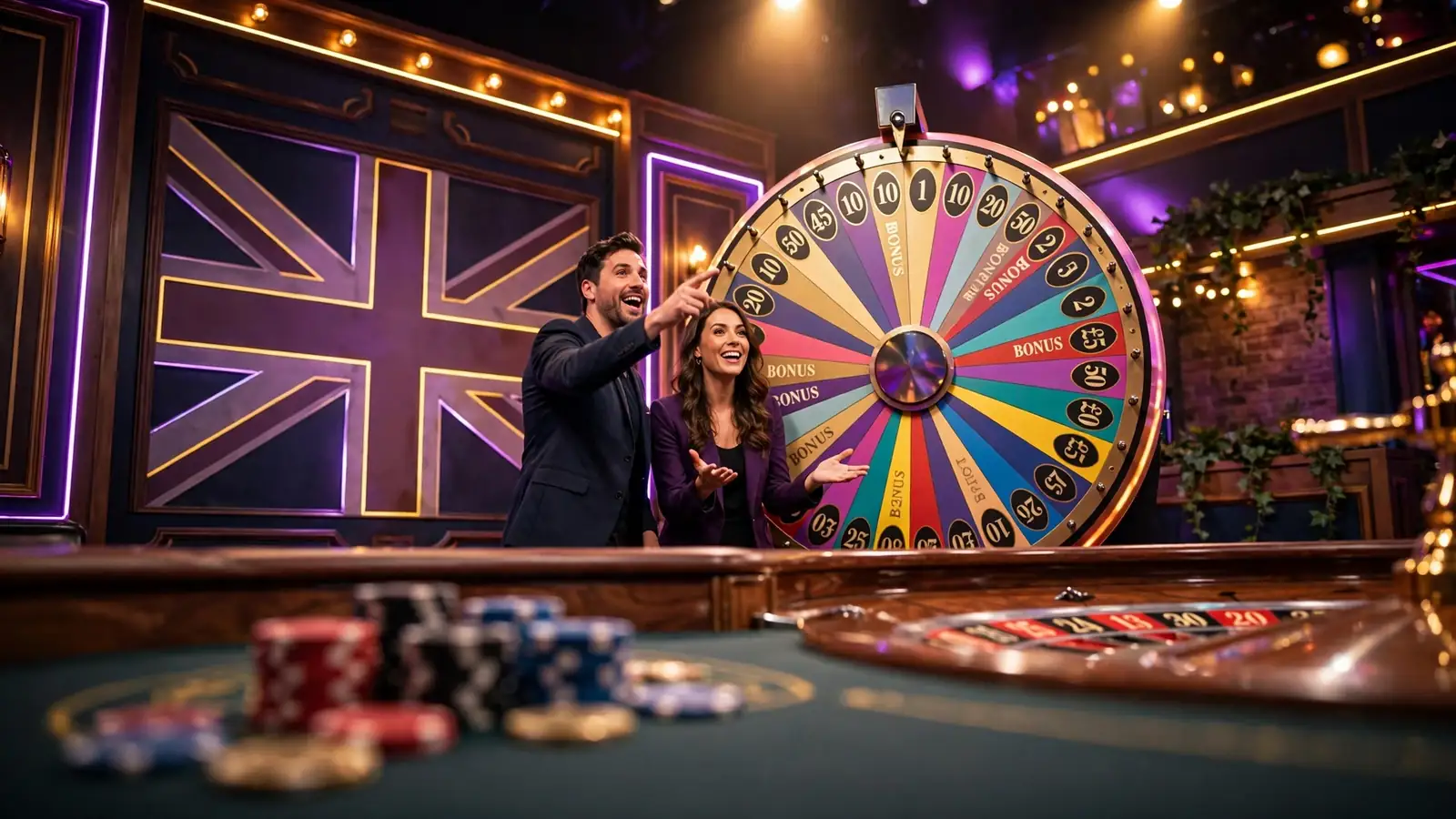
Table of Contents
The guide separates operator licensing from game availability, then covers lobby access, side features, demo play, deposits and bonus limits.
How to assess a UK casino offering Crazy Time
A casino listing Crazy Time is not automatically a casino authorised to take real-money play from people in Great Britain. I separate those checks. First comes the operator’s permission to serve the market; only after that does it make sense to assess the game offering. A polished page, a familiar game title or a working registration form cannot stand in for a licence.
The Gambling Commission regulates commercial gambling in Great Britain and issues operating licences to businesses. Remote operators serving consumers there must hold the relevant Commission licence, even if their offices, studios or other key equipment are elsewhere. That makes the operator’s regulatory status the starting point for assessing a UK-facing casino, rather than the country shown in a footer or the location of a live-game studio.
Start with the operator, not the game tile
A Crazy Time tile tells me that a site is advertising access to the game. It does not tell me which legal entity would accept a deposit, whether that entity has a relevant licence, or whether the licence covers the activity being offered. Those are separate questions.
The name displayed to customers may be a brand, while the licence belongs to a company with a different legal name. A casino group may also operate more than one website. I therefore look for the company responsible for the gambling service: in the site’s terms, its licensing information and its account documents. The same legal entity should be traceable through the site and the Gambling Commission’s public register. If the relationship between the brand and the company is unclear, I treat that as unresolved rather than filling the gap with an assumption.
This is a useful distinction in practice. A brand can look established and still leave the customer unsure who is providing the service. Conversely, a different company name on the register is not, on its own, evidence of a problem if the site clearly explains the connection. The point is to establish that the operator behind the page is the operator whose permission is being checked.
Deal or No Deal Casino UK: How the Slots Work
Use the public register as the licensing check
The UK Gambling Commission’s public register is the place to verify an operator’s licence. I would not rely only on a badge, logo or licence number printed on a casino page. The practical check is to find the operator in the register, compare its identity with the company named by the site, and verify the licence number there before depositing.
A brand-name search is a starting point, not the whole exercise. If it does not find a clear match, search for the legal company name given in the site’s terms. Then compare the registered business with the website address and brand the operator uses. A genuine relationship should be explainable without guesswork. If the site names one company but the register result points to another, the operator should make the connection clear.
The register is more useful than a screenshot supplied by the casino because it is the regulator’s public record. A screenshot can be old, cropped or detached from the page it supposedly represents. A number copied into a footer can also be difficult to assess without checking who holds it. I treat the register entry as the reference point and the casino’s own disclosures as information to compare against it.
The check needs to be specific to the service being offered. The relevant issue is not simply whether a business name appears somewhere in the register; it is whether the company operating the site holds the required permission for remote gambling offered to Great Britain consumers. If the site’s terms name a different company for payments, account management or gambling services, that difference deserves clarification before an account is funded.
A listing for a related company is not a substitute for checking the actual operator. Nor is a licence held by a game supplier proof that a casino has permission to serve customers. The supplier and the casino have different roles: one provides a game, while the other makes the gambling service available to its customers. I keep those roles separate.
Do
- Use the Gambling Commission’s public register to verify licenses
- Compare the registered company name with the site’s terms
- Search for the legal entity if the brand name is not found
Don’t
- Rely solely on badges, logos, or license numbers on a page
- Use screenshots provided by the casino as primary proof
- Assume a site is authorised based on its design or popularity
Match the register result to the site
A reliable comparison uses more than one identifier. I look at the registered company name, the licence number and the website or brand details that connect the register entry to the casino. I then compare those details with the legal information on the site itself. The names need not be identical in every place, but the relationship should be intelligible.
A mismatch can have ordinary explanations: a trading name may differ from a company name, or a group may use several brands. But an explanation is not the same thing as verification. If the casino does not identify the responsible company, if its licence details lead to an unrelated entity, or if the address being checked has no clear link to the register entry, I would not treat the issue as settled.
I also look for consistency across the site. The terms, privacy information and licensing page should not point to different operators without explaining why. A page that names one company in its footer and another in the account terms creates a basic accountability problem. It becomes harder to know which business is responsible for the customer relationship and which licence is meant to cover it.
There is no need to infer permission from design quality, the number of games, a customer-service promise or a brand’s apparent popularity. Those details may help describe the service, but they do not answer the licensing question. The register does.
Read date-sensitive claims as date-sensitive
Register information can change, so claims about a particular operator should be tied to when the check was made. A specialist review reports that the public Gambling Commission register dated 26 September 2026 did not show a LuckyPays entry under that brand or its stated domain, including luckypays.io. That is a dated report about what the register showed at that point, not a permanent description of the operator’s status.
Crash Casino Games in the UK: Formats and Play
The distinction matters. A reader should not turn a dated register observation into a claim about what the register shows now, or assume that a similar name belongs to the same company. The sound approach is to check the current public register directly and match the operator’s legal details and website. If those details have changed, the live register and the operator’s current disclosures are the material to compare.
The same care applies in the other direction. A casino’s statement that it is licensed is a claim to verify, not the verification itself. If the register does not produce a clear match, that does not justify inventing a connection or assuming that the site is authorised because it offers a recognisable game. It means the licence check has not been completed.
Understand what the licence check does—and does not—show
A valid operator licence addresses whether the business has the required permission to offer remote gambling to consumers in Great Britain. It does not guarantee that every game will be available at every moment, that a particular promotion will suit every account, or that a customer will have a positive experience. Those are different matters and should not be bundled into a broad label such as “trusted”.
I use licensing language narrowly. “Licensed” means that the relevant operator and service can be matched to the Commission’s register; it is not a promise about results, service quality or uninterrupted access. A game appearing in a lobby is not evidence of a licence, and a licence entry by itself does not tell me whether Crazy Time is currently available on a particular account.
Licensing Status
A valid operator license confirms the business has permission to offer remote gambling to Great Britain consumers, but it does not guarantee game availability or service quality.
This separation also prevents a common category error: confusing a company involved in the game with the casino taking the customer’s play. A provider’s name may appear beside a game, but the customer still needs to establish who operates the casino account and whether that operator holds the permission required for the British market. One check cannot replace the other.
The regulator’s remit concerns gambling activity, not the wording of a casino’s marketing alone. The Gambling Act 2005 governs gambling in England, Wales and Scotland, while Northern Ireland is outside that Act. For a remote casino serving Great Britain, the key practical point remains that the operator must hold the relevant Gambling Commission licence regardless of where its equipment is located.
Treat offshore claims with the same discipline
A site may say that it is licensed somewhere else, or that its equipment and management operate from another country. Those statements do not answer whether the operator is authorised to serve Great Britain consumers. The Commission’s requirement applies to remote operators selling into that market, regardless of the location of the key equipment.
I would not treat foreign permission as a replacement for the British licence check. Nor would I assume that a site is authorised because it accepts a British address, displays prices in pounds or has a page written for UK customers. Those are features of presentation or access, not proof of the relevant local permission.
The practical test stays the same: identify the company taking responsibility for the gambling service, then confirm its relevant licence through the Commission’s public register. If the site relies on a different jurisdiction’s rules but cannot be matched to the required British authorisation, that does not meet the licensing check for Great Britain.
Casino Dice Games in the UK: How Play Works
This is not a judgement about the quality of a game or the appearance of a website. It is a boundary around who is authorised to provide the service in the market. Keeping that boundary clear avoids mistaking availability for approval.
Avoid rankings that confuse popularity with permission
Lists of casinos can make selection look simple, but a ranking is not a licensing method. A casino might be placed first because of a promotion, a reviewer’s preference or an editorial arrangement. None of those signals establishes that the correct operator holds the licence for the service being offered.
I would rather compare verifiable details than accept a “best” label. The operator’s identity, its register entry and the connection between its brand and licensed company are more useful than a star score for deciding whether the site is authorised. Once that threshold is clear, separate checks can address the casino’s own terms and the game’s availability. They should not be compressed into one endorsement.
The same logic applies to comparison tables. A column marked “licensed” is only useful if it identifies the operator and can be checked against the public record. Without that connection, the label is just another assertion. A page can mention Crazy Time repeatedly and still leave the central question unanswered.
I have found it helpful to write down the exact company name and site address being checked, rather than relying on memory or a general impression of a brand. That simple discipline makes it easier to spot when a page, a register result and an account agreement refer to different entities. A mismatch may have an explanation. It still needs one.
Licensing Risk
If a casino’s license details lead to an unrelated entity or the connection between the brand and the company is unclear, the operator should not be treated as verified.
A practical check before creating an account
Before treating a casino as a UK option, I would establish the identity of the business named in its terms, find that business or its clearly linked operator in the Gambling Commission register, and verify the licence number there. I would then compare the registered details with the site and its stated brand. If the link is not clear, I would pause rather than infer it from the game catalogue.
That process is deliberately narrower than a review of the casino as a whole. It does not rate the lobby, assess a live table or explain how Crazy Time works. It answers the prior question: whether the operator can be matched to the permission required to serve Great Britain consumers. Once that is settled, the game and account details can be considered on their own terms.
A recognisable title can attract attention. It cannot do the register’s job.
Finding Crazy Time in a live casino lobby
Crazy Time is found among live casino games, not by browsing the casino’s table-game rules or its general promotions. That distinction matters. A casino website is the operator’s wider service; its live lobby is a catalogue of games, often arranged by format or category. The game’s tile is the point of entry.
I look first for a section labelled “Live Casino” or “Live Games”. The exact wording and layout differ between operators, but the purpose is the same: separate games presented live from other casino products. Once inside, a search field can be quicker than scanning every tile. Entering “Crazy Time” should narrow the catalogue if the game is available in that lobby. A wheel or game-show category may also be present, though not every site organises its games in the same way.
Mines Casino Game UK: Demo and Real-Money Context
That is a practical search route, not a guarantee of availability. A casino can offer a live lobby without listing every live game. The catalogue may also change, or present different selections depending on the account, location or device. If a tile does not appear, it is better to check the lobby’s categories and search function than to assume the game has been removed from the wider market.
Read the tile as a doorway
The Crazy Time tile is usually the clearest visual cue: the title, artwork and a launch control identify the game. The prominent wheel imagery can help distinguish it from card tables and roulette, but the image is only a label. It does not explain how a round works or what a particular wager means. Those details belong on the game screen and in its rules, not in a thumbnail.
I treat the tile as a doorway rather than a recommendation. A bright design, a “popular” tag or a position near the top of the lobby tells little about whether the game suits a player. Lobby placement is a merchandising choice. Operators have reasons to feature particular titles, and those reasons need not have anything to do with a game being better for the person opening it.
The distinction is easy to miss because live casino pages often combine browsing and promotion. A banner may lead to a game, a campaign or a general live-games page. The title itself is more useful than the surrounding artwork: confirm that the selected tile says Crazy Time before launching. Similar visual styles across live games can otherwise make a quick glance unreliable.
Finding Crazy Time
Step 1: Access the Live Section
Navigate to the area labelled “Live Casino” or “Live Games” to separate live products from other casino games.
Step 2: Use the Search Tool
Enter “Crazy Time” into the search field to quickly narrow the catalogue.
Step 3: Verify the Tile
Confirm the title and artwork on the selected tile before launching the game to ensure it is the correct title.
What “live” means in the catalogue
A live casino lobby groups games presented in a live format, commonly alongside categories for different table games or studios. It is a way of finding a type of product, not a separate measure of the casino’s standing. Moving from the main casino page into the live section narrows the catalogue; it does not answer broader questions about the operator.
The format has a longer history in the UK than the current game-show style might suggest. Grosvenor unveiled its live casino games in 2013, with card and casino options including Blackjack, Texas Hold’em and Roulette. That history shows how live games became part of casino offerings; it does not mean every modern live title is available at every operator.
Once a game is opened, the screen commonly gives it more room than the lobby tile and brings its controls and information into view. The layout can vary by operator and device. On a smaller screen, controls may sit below the main image or behind menus; on a larger display, more of the interface may be visible at once. The sensible approach is to orient around the game title and the on-screen information, rather than assuming every casino uses the same layout.
A live presentation can feel like a show, while the lobby remains a catalogue. Those are different layers. The lobby helps locate a title; the game screen is where the actual play interface appears. Neither should be confused with a casino’s general account pages or its advertising banners.
Chicken Road Game in UK Casinos: What to Verify
When the game is hard to spot
Some lobbies show featured titles before the full catalogue. Others open on a list, with filters for game type or provider. If Crazy Time is not immediately visible, I would check whether a filter is active and whether the catalogue is displaying featured games rather than all games. A search box, where available, removes much of the guesswork.
The tile may also be grouped under a label that does not use the word “wheel”. A live lobby might categorise by game style, provider or another internal menu structure. Searching the title directly is therefore often more dependable than trying to predict the operator’s filing system. If there is no search function, browsing the live catalogue is the fallback.
This is also where desktop and mobile layouts can differ. A mobile site may collapse categories into a menu or display fewer tiles at a time. That changes the route through the lobby, not the game itself. It can be worth returning to the main live section if a narrow filter appears to have hidden the title.
Finding a game is not choosing a casino
The phrase “best casino” is often attached to a particular game, but a lobby cannot establish that ranking. It can show whether a title is listed and how the operator has arranged its games. It cannot, by its visual polish or featured placement alone, tell whether the operator is suitable overall. Casino selection and game navigation are separate decisions.
I keep those checks separate because the labels on a lobby are designed to help people browse, not to provide a complete account of the business behind it. “Featured” means promoted within that interface. “Live” describes the section. Neither label is a quality mark. The user experience can be smooth while the wider service still needs independent scrutiny.
Attention: Lobby labels such as “Featured” or “Live” are navigation and merchandising tools; they are not quality marks or evidence of a casino’s overall standing.
The same applies to search results within a casino. A result matching the title is a useful sign that the game is in that catalogue at that moment. It is not a promise that the tile will remain there, or that every feature will look identical across platforms. Operators can change how they display a lobby.
For a straightforward route, open the live casino area, use its search or game categories, and confirm the title on the tile before launching. If a wheel image catches the eye, check the name as well. It is a small distinction, but it prevents the lobby’s artwork from doing the job of the game label.
The practical point is modest: a live casino lobby is a navigation tool. It helps locate Crazy Time among other live titles, while the broader question of which casino to use remains separate. No banner can settle that.
Rules, side features and what a “strategy” can actually do
A strategy for Crazy Time can help organise decisions; it cannot make a future result knowable. I separate three things that are often bundled together in promotional copy: the game’s rules, the choices available during a round, and claims about predicting what comes next. Only the first two can be checked against the operator’s published game information.
Live Dream Catcher Casino in the UK: What to Check
Before wagering, the rules and paytable show what the available outcomes mean and how a winning wager is settled. Side features matter because they can have different rules and payout conditions from the main game. “More ways to play” is not a measure of value by itself. It is a prompt to check which outcomes a wager covers, when it is settled, and what the displayed return applies to. A headline feature can attract attention while its detailed conditions remain the part that determines the result.
That is the useful work a strategy can do: keep the rules straight, make choices consistent with a pre-set budget, and prevent an impulsive change of plan after a win or loss. It cannot turn chance into a sequence that is due to correct itself. A run of outcomes does not, on its own, establish that the next result is more likely to be different. Nor does a past result make a later one predictable.
What a tracker can and cannot tell you
A Crazy Time tracker may present recorded outcomes in a history or chart. That can be useful for reviewing what has happened, or for understanding how a particular interface displays past rounds. It is not a forecast. A record of previous outcomes does not demonstrate that a pattern will continue, reverse, or make a selected wager more likely to win.
I treat tracker claims cautiously when they move from description to instruction. “Hot” and “due” are persuasive labels, not evidence of a reliable edge. The tracker may also be limited to the data it has collected; its display should not be mistaken for a complete record of every round. Even an accurate history remains history. It does not change the rules of the next round.
Understanding Trackers
A Crazy Time tracker records previous outcomes in a history or chart. While useful for reviewing past rounds, it is not a forecast and cannot predict whether a specific wager is more likely to win in the next round.
A strategy based on tracking can therefore be a record-keeping habit, not a prediction system. It may help someone notice how often they are changing their selections or exceeding a personal budget. It cannot prove that a particular selection is safer, nor guarantee a return. That distinction is easy to lose when a chart is presented beside a confident recommendation.
The game’s history is not a system
Interest in the game’s history can mean two different things: how the product developed, or what outcomes appeared in previous play. Neither should be confused with a method for forecasting the next round. A historical account of a game can explain its design and presentation; a results history can document earlier outcomes. Neither creates advance knowledge.
I would also avoid treating an old screen capture, a third-party chart, or a community spreadsheet as the game’s official rules. Those materials may help explain what someone saw, but the operator’s current rules and paytable are the relevant reference for how its version is presented and settled. A discrepancy is a reason to pause, not to choose whichever description supports a preferred strategy.
There is a separate regulatory point around stake limits. A specialist review describes Great Britain’s online-slot cap as £5 for each game cycle for adults aged 25 and over, and £2 for adults aged 18 to 24. The same kind of review says those slot caps do not cover roulette or blackjack. That is a scoped statement about those game categories, not a basis for assigning Crazy Time to either one. Its classification should not be assumed from the fact that it is a live casino game show; the relevant rules need to be established for the product and operator concerned.
Classic Slots Online in the UK: How They Work
No shortcut. A useful approach is modest: understand the published rules, know what each wager covers, and treat trackers as records rather than signals. The strategy is the discipline around the game, not a way to control its outcome.
Free play and demo access: practice without a deposit
A free version of Crazy Time can be useful for getting familiar with the screen and seeing how a round is presented, without putting money into an account. It is not a preview of every part of the paid experience, though. Some casinos may offer a demo, while others may not make one available. The label alone tells little about what is included.
In a demo, the game may use simulated credits rather than funds that can be withdrawn. That makes it a way to explore the interface, not a way to test whether a casino will accept a deposit, process a withdrawal or apply its paid-game conditions in a particular way. Those are separate matters. I learned to treat “free” as a description of the access on screen, not as a promise about the account behind it.
The same distinction applies to free spins. The phrase can describe a promotional offer tied to an account, rather than an open demo of the game. Its terms may determine how the offer works and whether any resulting balance is subject to conditions. A demo, by contrast, is generally presented as a way to try a game without staking deposited funds. The names can look similar in a lobby or advertisement; the mechanics are not interchangeable.
Using Free Play
- Use the demo to familiarise yourself with the on-screen controls
- Review the broadcast layout and interface
- Distinguish whether the offer is a demo or a promotion with account conditions
- Separately verify the operator’s regulatory status via the Gambling Commission
A free-play option also says nothing by itself about whether a casino is safe or authorised to serve people in Great Britain. A polished game window is not evidence of regulatory status. The UK Gambling Commission oversees gambling activity in the United Kingdom, including online casinos, and its remit for remote gambling offered to Great Britain consumers applies regardless of where the operator’s key equipment is located. The demo and the operator are different things to assess.
That matters when reading a Crazy Time casino review. A review may show that the game opened in a test session, or describe how the free version behaved. Neither observation establishes the terms of real-money play or the operator’s standing. I separate claims about the game itself from claims about the casino providing access. “Reviewed” can sound conclusive; often it only means that someone inspected a particular part of the experience.
Reviews are most useful when they make that boundary clear: whether they tested a demo or paid play, what was actually observed, and whether a statement refers to the game or the operator. A review that treats a free session as proof of a reliable casino skips the distinction that matters. So does a page that calls an option “free spins” without explaining whether it is demo access or an account promotion.
There is no guarantee that every UK-facing casino will provide Crazy Time in demo mode, and a missing demo does not, on its own, settle the question of how the paid game works. Availability can depend on the operator’s offering. Where a demo is present, it can help with basic familiarity: where the controls appear, how the broadcast is laid out and what the interface looks like. It cannot reproduce every condition attached to real-money play.
I use free access for orientation, not endorsement. It can answer a narrow question about presentation; it cannot answer whether an operator is properly authorised or what its paid-account terms say. Keep those checks separate. That is the useful limit.
Bonuses, deposits and the limits behind the offer
A welcome bonus, deposit match or “no deposit” offer is a set of terms attached to real-money account use, not an extra balance with no strings. I look first at what the offer requires: whether a qualifying deposit is needed, which games count towards any conditions, and what happens to bonus funds and any associated winnings if those conditions are not met. The wording matters more than the headline. A bonus can be unavailable for a particular game, including Crazy Time, or can have conditions that make it a poor fit for someone who only wants to play that game.
“Fast payouts” is another phrase to read as a claim, not a promise. Withdrawal conditions, identity checks and the operator’s stated process determine what happens after a request; a bonus does not establish how quickly money will arrive. Nor does an offer establish that an operator is authorised. The Gambling Commission is Great Britain’s sole regulator for commercial gambling and issues operating licences to businesses, rather than treating a promotion as evidence of approval.
A search for a casino “not on GamStop” needs particular care. Whether a site participates in a self-exclusion scheme is separate from whether it is licensed to offer real-money gambling in Great Britain. It should not be treated as a shortcut to a bonus or as a substitute for checking the operator’s status.
There are practical rules around funding an account. Operators must verify a customer’s age before allowing a deposit. Credit cards cannot be used for gambling payments, including through a money-service business; a wallet that allows credit-card funds to be used for gambling is not an acceptable workaround. New customers must be prompted to set a financial limit before their first deposit, and operators must make account-level limit controls accessible. These controls are part of account management, not merely promotional wording.
I treat the deposit amount as money at risk, whether or not a bonus is attached. Read the terms before accepting an offer, and do not deposit to unlock one if its conditions do not suit the intended play. Keep the limit meaningful.
Only gamble what you can afford to lose.
Are online casino games licensed and regulated?
Yes. The UK Gambling Commission regulates remote gambling offered to consumers in Great Britain, and operators must hold the relevant licence.
Is LuckyPays licensed by the UK Gambling Commission?
The public Gambling Commission register dated 26 September 2026 did not show an entry for LuckyPays or its stated domain, luckypays.io.
What are the online slot stake limits in Great Britain?
The limit is £5 per game cycle for adults aged 25 and over, and £2 for adults aged 18 to 24. These limits do not apply to roulette or blackjack.